
Wavegarden Lagoon
Wavegarden Lagoon technology was the first commercially available tech from Wavegarden.
Wavegarden Lagoon Technology
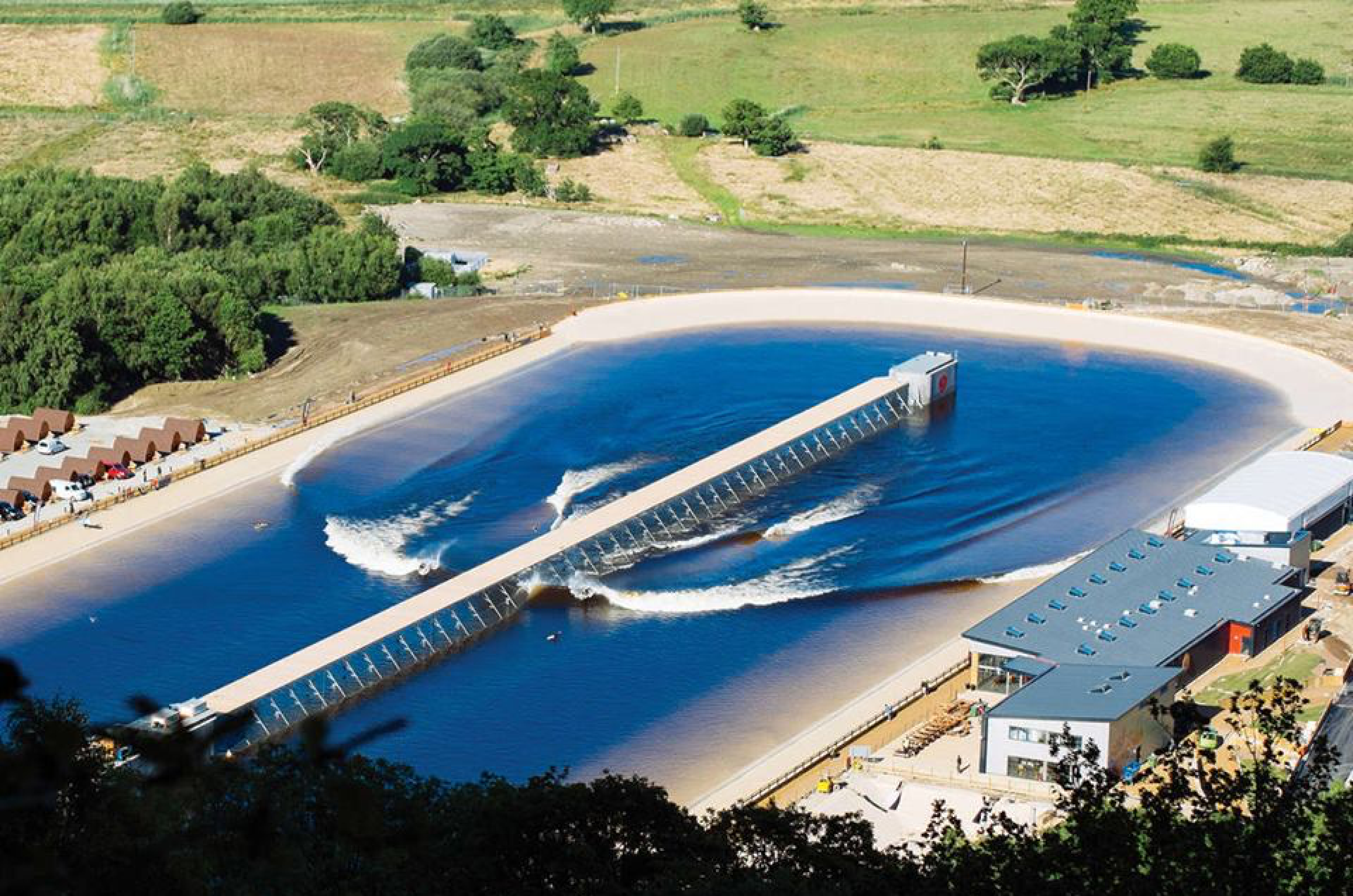
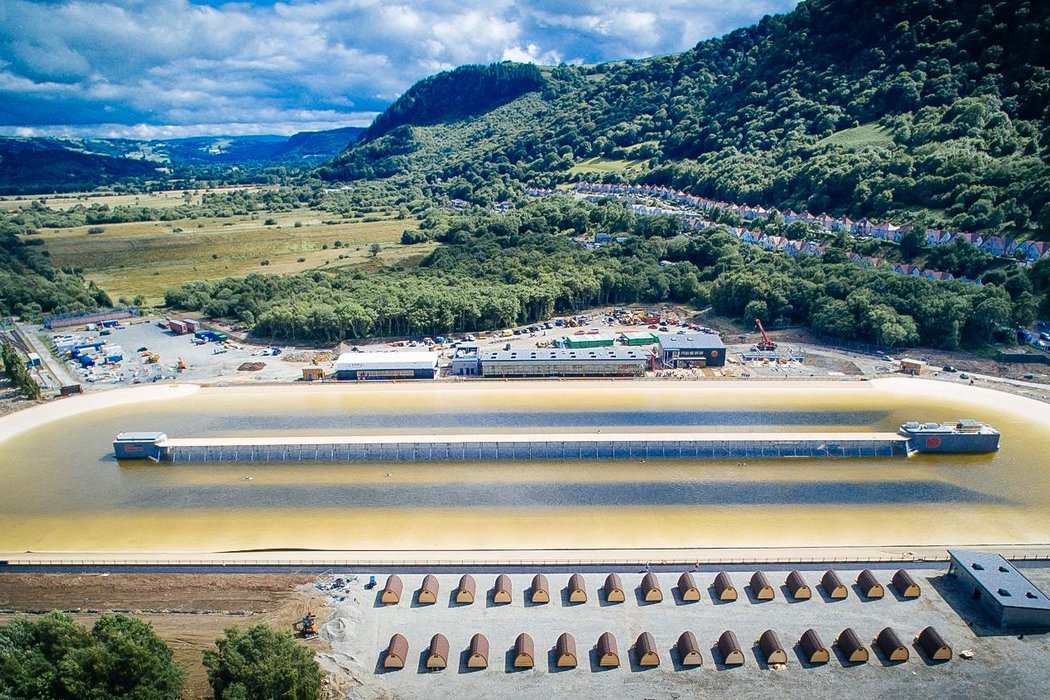
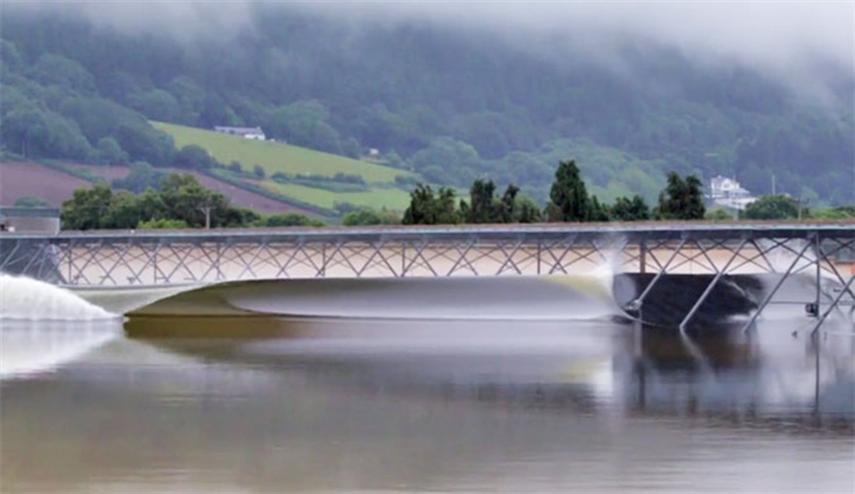
The Wavegarden Lagoon technology generates waves by pulling a “wavefoil" through the water. It’s similar to KWSC technology but the foil runs through the center of the wave pool generating multiple waves on either side.
The patented wavefoil is similar to an airplane wing, according to Wavegarden, and it’s designed to produce waves while minimizing energy consumption. The galvanized steel wavefoil has a bi-directional shape so it cab be pulled up and down the length of the wave pool. A gearless drive system, similar to a ski lift, pulls the wavefoil up and down the lagoon at 4.5 to 7.5 meters (14.7ft-24.6ft) per second.
As the wavefoil moves through the water, it creates waves on both sides of a central pier that propagate toward the shoreline and interact with various bottom contours before breaking. The engineers at Wavegarden use computational fluid dynamics to customize the bottom of the pool to meet their clients’ needs. For example, if a client wants to host WSL contents, then the Wavegarden team will design bottom contours that provide vertical lips and barrel sections. Wavegarden can also provide removable features that can be added to the floor of the pool to temporarily change the waves, so if the customer wanted to host an air contest, they could temporarily add features to the floor of the pool to generate air sections.
Under the pier, the depth of the pool is 2m. The waves in the advanced are break in roughly 1m of water and the waves in the beginner areas break in water that is roughly knee deep.
Settling time, i.e. the time it takes water to settle after a wave or set of waves is produced, is a critical factor for wave pool technology. The Wavegarden team patented dissipative shores that help minimize settling time by reducing backwash and currents.
Wave Sizes and Shapes
Wavegarden recommends one of three standard pool configurations to their customers.
The smallest standard installation is a 190 x 100m (623 x 328ft) pool that provides 22 second rides on waves up to 1.3m (4.2ft) high on the face of the wave. Their intermediate size pool is 330 x 140m (1082 x 459ft) and it provides rides for 35 seconds on waves up to 1.9m (6.2ft) high. Their largest standard configuration is a 330 x 140m (1082 x 459ft) pool that provides rides for 25-27 seconds on waves 2.2m (7.5ft) high.
| 1.3m WG Lagoon | 1.9m WG Lagoon | 2.2m WG Lagoon | |
|---|---|---|---|
| Wave Height | 1.3m (4.2ft) | 1.9m (6.2ft) | 2.2m (7.5ft) |
| Length of Ride | 22 sec | 35 sec | 25-27 sec |
| Standard Dimensions | 190 x 100m (623 x 328ft) | 330 x 140m (1082 x 459ft) | 330 x 140m (1082 x 459ft) |
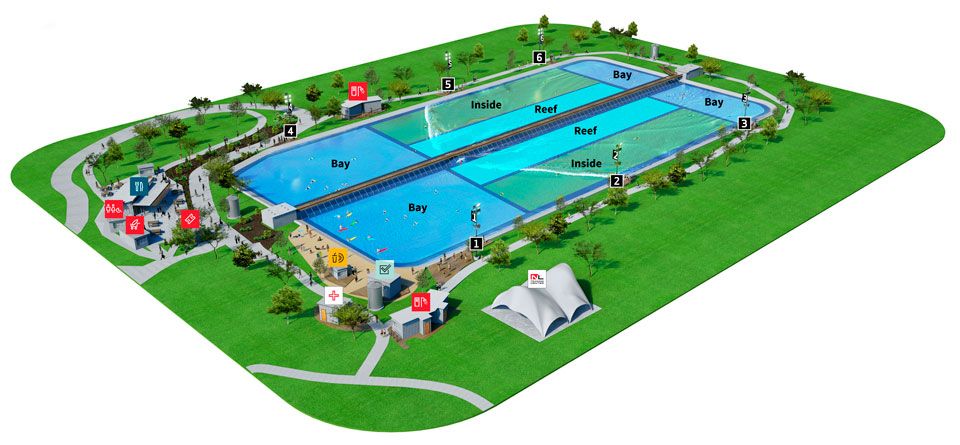
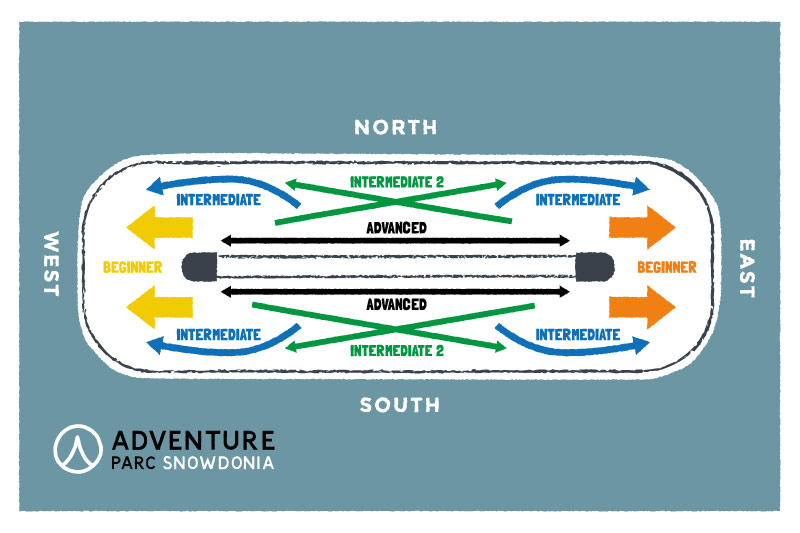
There are eight areas in a standard Wavegarden Lagoon installation and six of them break with each run of the wavefoil.
The main attraction is the Reef, which is the wave just adjacent to the pier on either side. This is where the largest, most advanced waves in the pool will break. Surfers on either side of the pier alternate between going left and right as the wavefoil moves up and down the central pier.
The Inside areas provide long, peeling point break waves according to Wavegarden, but there is not much video of people surfing the intermediate waves publicly available.
The Bay areas provide a Waikiki-style whitewater rollers that are perfect for beginners catching their first waves.
Read More
Ride Capacity in Wavegarden Lagoons
According to Wavegarden, between 45 and 140 surfers share a 1-hour session. This number, and the number of waves each surfer gets per hour, primarily depends the size of the pool.
The settling time is another major factor. According to Wavegarden, the wavefoil runs every 1-2.5 minutes to allow currents and chop to settle between waves.
Beginners tend to share waves, so depending on froth levels and operating policies, their rides-per-session could be higher.
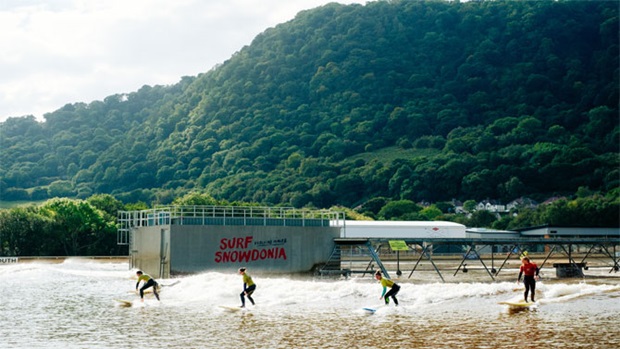
We’ve seen a similar data at the Wavegarden Lagoon installations. Before it closed, the wavefoil at Nland ran every 2-3. At Surf Snowdonia, the wave foil runs every 70-90 seconds.
The number people in the pool and in each area of the pool varies based on the facilities policy and popularity, but its safe to say that all of this boils down to about 12-18 waves per session for advanced and intermediate surfers.
Controlling Wavegarden Lagoons
Wavegarden Lagoon pools are operated and monitored with proprietary software. The operator can select from multiple predetermined wave types that vary in size. The operator can also manually set the speed and angle of the foil to experiment with new wave types.
The system continuously monitors hydraulic pressure, currents, wind and other variables that help the operator create great waves effectively and safely. The on-site system can also be remotely accessed by the Wavegarden engineers for operating and diagnosing the machinery.
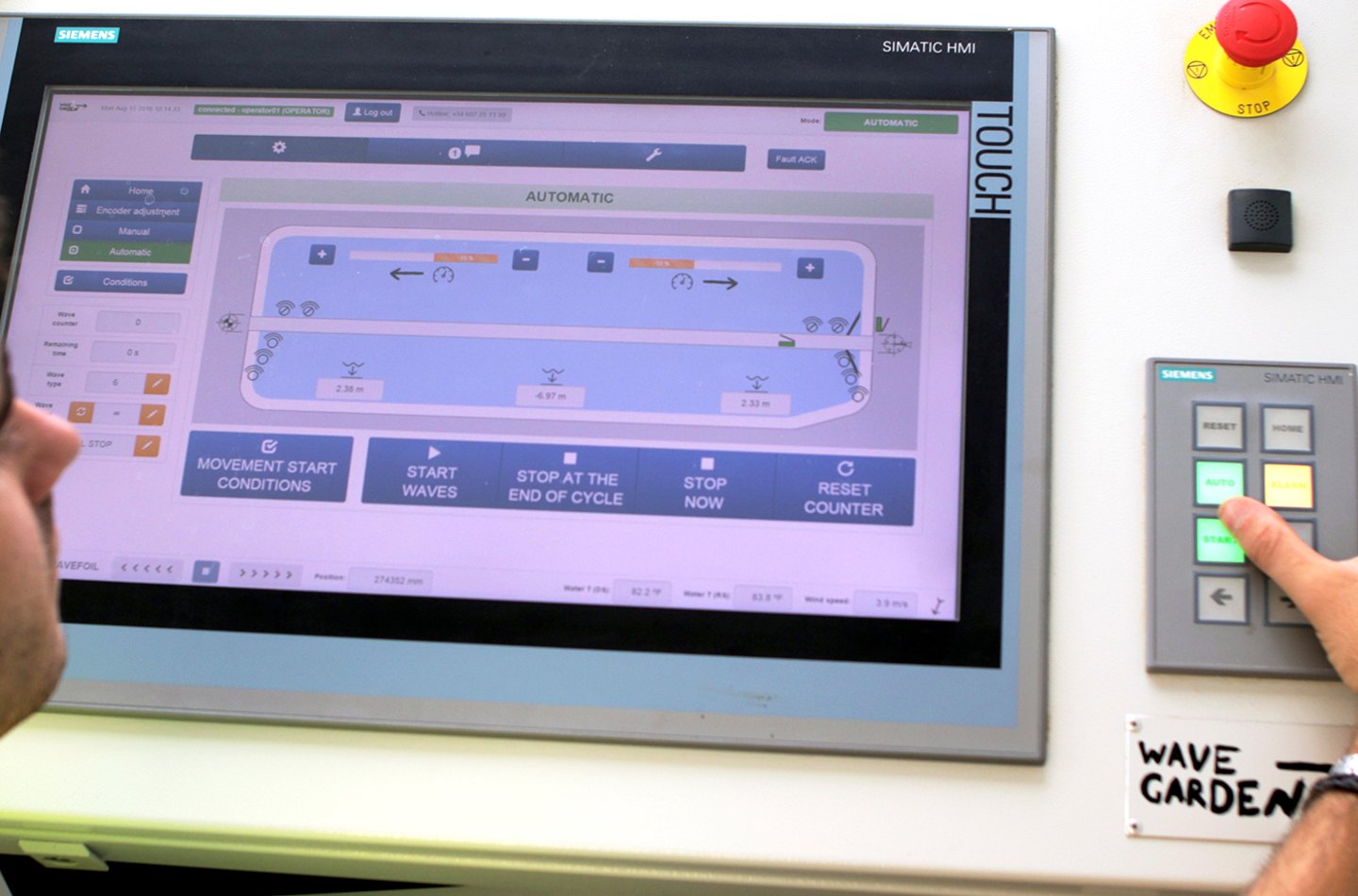
Photo: Wavegarden
Wave Characteristics in Wavegarden Lagoon Pools
Wavegarden Lagoon wave pools can create a variety of waves but they are not (yet) known for powerful, high-performance waves. In the Reef areas of the pool, intermediate and experienced surfers will find a challenging wave that can offer a vertical lip and opportunities for a variety of turns, but barrels and air opportunities are extremely rare. The wave is described as fun by most average surfers but occasionally accused of being on the softer side. Conditions vary based on wind, section and the operators choice of “wave type".
Not as much is known about the intermediate waves, but they are most often described as slower and best suited for longboards and other high-volume craft.
The beginner waves are similar to what you may find in Waikiki: knee to waist-high crumbly whitewater rollers that are perfect for beginners.
Wave Pools Powered by Wavegarden Lagoon Technology
Highlights and Lowlights
| Suitable for generating longer rides. | |
| Wave shape is good for beginner and intermediate surfers. |
| Wave production rate is relatively low. | |
| Relatively softer waves. | |
| Rarely generates barrels. |