
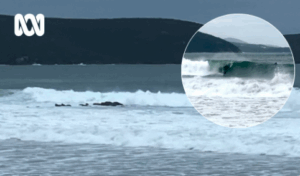



The city of Albany in Western Australia is home to an artificial surfing reef called the Southern Ocean Surf Reef (SOSR) off Middleton Beach, hence the nickname “Midds Reef”. The reef, constructed using rocks, sits about 120 meters off shore an creates a left that, on typical swells, is suitable for beginners and intermediates. On larger swells, the wave is more suitable for advanced surfers.
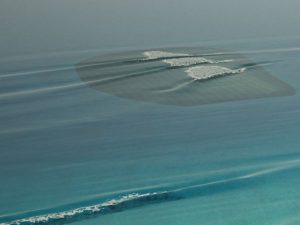
The reef refracts incoming swells to produce a left-hand break that runs for roughly 100m. The wave hight averages 0.8 – 1.3m measured on the face of the wave. Waves will break on the reef 40% of the year.
The reef was officially opened to the public on July 16, 2025.
The southern coast of Western Australia is know for powerful swells generated by storms in the Indian Ocean. These swells consistently make their way into Albany beaches where frequent offshore winds help groom them. However, the monotonous shoreline does not shape the swells into a consistent, quality surfable waves.
After years of work from community leader Peter Bolt, the city of Albany recognized the opportunity to create a significant recreational and tourism asset through the development of an artificial surf reef at Middleton Beach. The reef could shape the incoming swells into consistently fun, surfable waves within close proximity to the Albany central business district.
The city formed the Albany Artificial Surfing Reef Steering Group to guide the effort and engage the community.
The city first hired Royal Haskoning DHV to conduct a in-depth feasibility assessment for the artificial surf reef in 2003. They recommended the use of geo-textile bags to form the reef.
After years of hurdles, hard work and grass-roots promotion, in 2012 the city engaged with Blue Coast Marine Engineers (including some of the same people who worked on the Palm Beach Reef) for additional analysis and design.
The Middleton Beach area has relatively low average swell height. However, analysis and modeling revealed that Middleton Beach possesses a number of very unique features that result in ideal conditions for an artificial surfing reef. Those include:
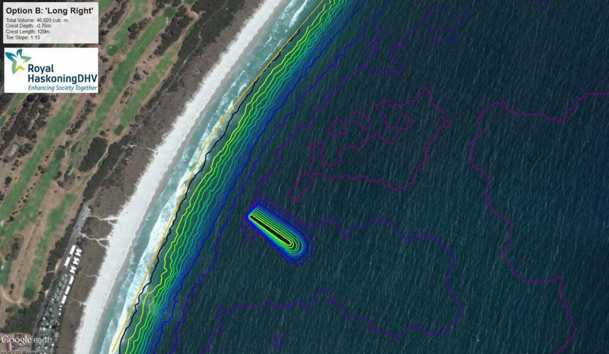
Blue Coast identified three reef design options and made recommendations that support the business case. The Steering Group selected the “Long Left” option, which has a total crest length of 120m. They selected that option because it will provide a better surfing experience than the alternatives and it will provide the best value in terms of length of ride per $.
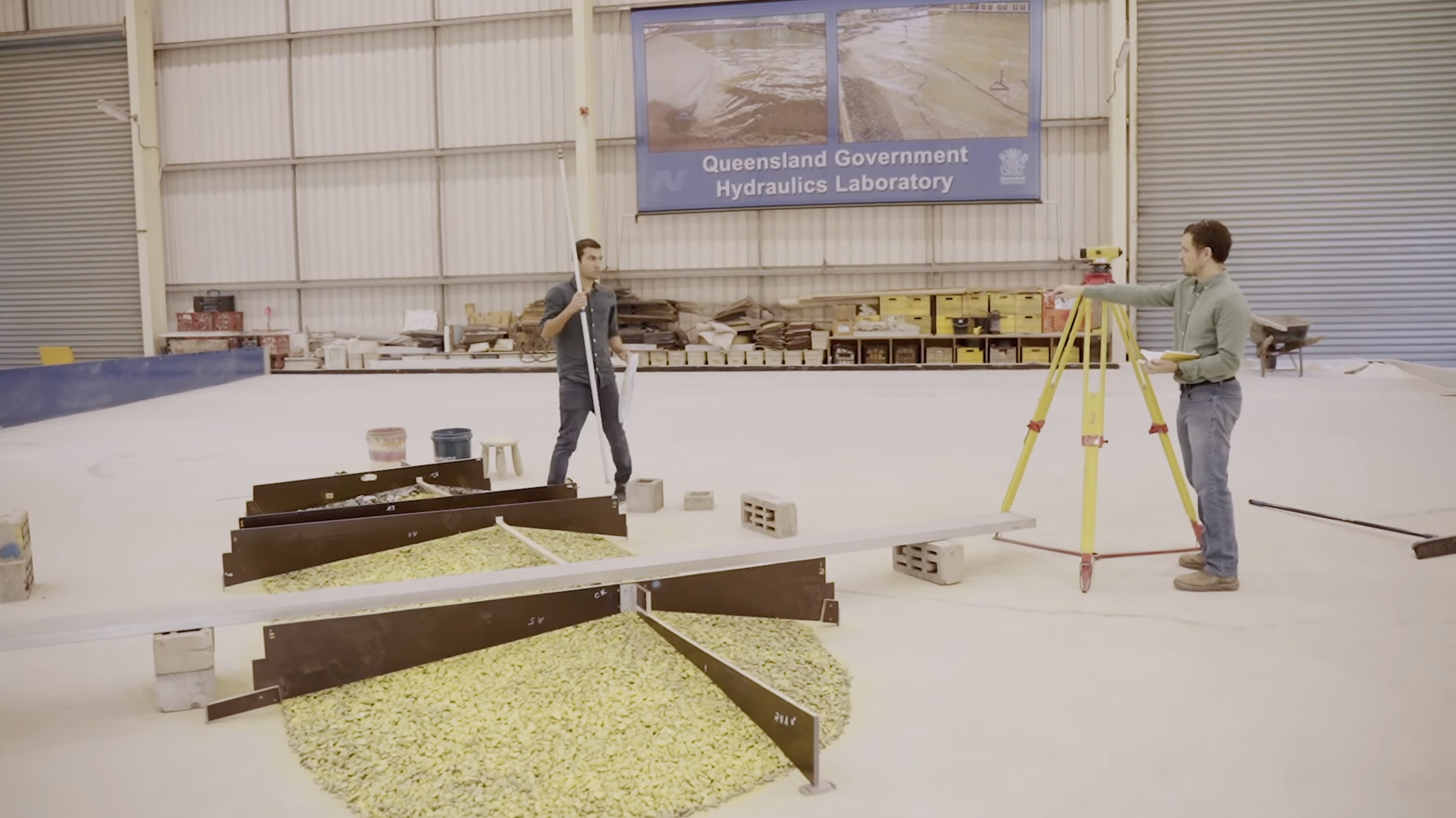
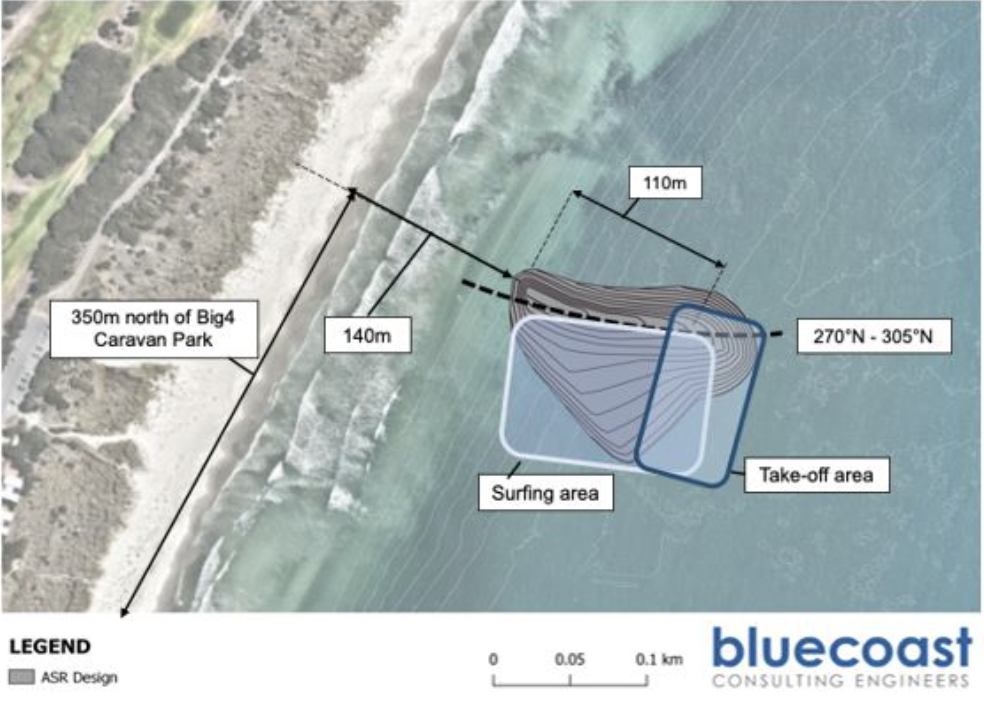
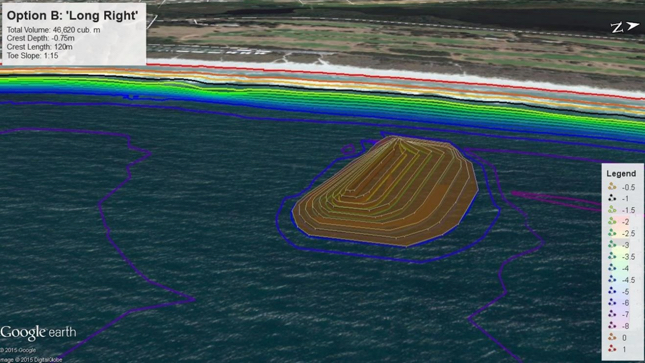
Blue Coast designed the reef to be constructed between 140-375m offshore using more than 47,000m3 (70,000 tonnes) of rock, similar to the Palm Beach Reef. That consists of:
As seen above, the rocks vary in size up to 1m in diameter.
The footprint of the reef is 1.61 hectares and measures 165m long and up to 110m wide. The crest of the reef will is roughly .75m under the surface of the water at low tide.
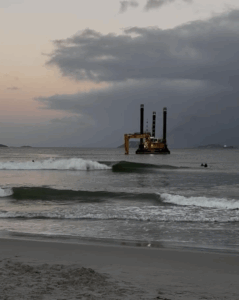
The construction teams used barges to transport the rock from Albany wharf to the reef installation site. Once on site, the construction team used a pin jib crane equipped with GPS to place the rocks around the perimeter to form the reef boundary. Then, using the jib crane and a barge-mounted excavator bucket, the construction team filled the area within the perimeter toe rocks with bulk place core material. During this time they monitored the depths and levels using side scan survey and GPS technology and used the excavator with to smooth the top of core material. Next, using a pin jib crane and rock-grab equipped with GPS, they placed the armor materials. Finally, the team checked and reposition the final layer to achieve construction tolerances using the excavator equipped with GPS.
To build support for the reef and the required funding, the City of Albany conducted a survey and received 728 responses. The majority (90%) of participants supported, in principle, the proposal to create the artificial surf reef at Middleton Beach. Furthermore, 97% of the respondents stated they lived outside of Albany and indicated that they would visit Albany more often if surf was better.
It’s no surprise that local surf clubs also support the creation of the reef. Albany Boardriders president Peter Bolt told The Western Australian that the artificial reef would make surfing more accessible.
“For juniors, learners and intermediates it’s going to be a huge bonus — and for tourism (as) tourists won’t have to go hunting,” he said.
“It’s a local beach that kids can get to on a bike and don’t have to go to isolated beaches where there are no facilities for rescues.”
To fund the analysis and design process, the WA State Government gave AUD $500,000 to the City of Albany.
The University of WA Wave Energy Research Centre reviewed the design process.
Construction of the reef cost AUD $11,750,000. That is made up of contributions from:
Royal Haskoning and Blue Coast designed the Albany Artificial Surfing Reef to create a consistent, surfable wave appealing to intermediate and beginner surfers. The resulting wave matches that description in small and medium swells, but on larger swells the wave gets notably more challenging.
Midds Reef also increased the number of surfable days per year. Research over a 13 month period prior to construction showed that only 6 surfing days were rated better than ‘Average’. After the installation of the reef, Royal Haskoning expects that the number will be increased at least 30x. Waves considered to be “better than average” are expected break 50% of the days in a year. Its unclear whether or not that is the case now that the reef is in place, but its clear that the waves are better shaped when there is swell.
Prior to construction, Royal Haskoning conducted cost-benefit analyses in order to assess the attractiveness of the proposed project relative to the ‘do nothing’ option. Conservative calculations from the business case demonstrate a positive NPV of $18m AUD. Most of that value comes from events, such as surfing competitions. The events attract participants from outside of the region and an increase in tourist visits and length of stay. The actually financial contributions of the reef have yet to be determined.
Sources: Albany Artificial Surf Reef Business Case, Royal HaskoningDHV, Bluecoast Consulting Engineers, Mirage News, The West Australia, Stab, The City of Albany