




Surf Snowdonia
at Adventure Parc SnowdoniaAverage Reviews
Description
Surf Snowdonia at Adventure Parc Snowdonia uses Wavegarden’s Lagoon technology to generate 4-6′ lefts and rights that can be ridden for up to 16 seconds. They also offer 3′ intermediate waves and lessons on knee-high waves suitable for beginners.
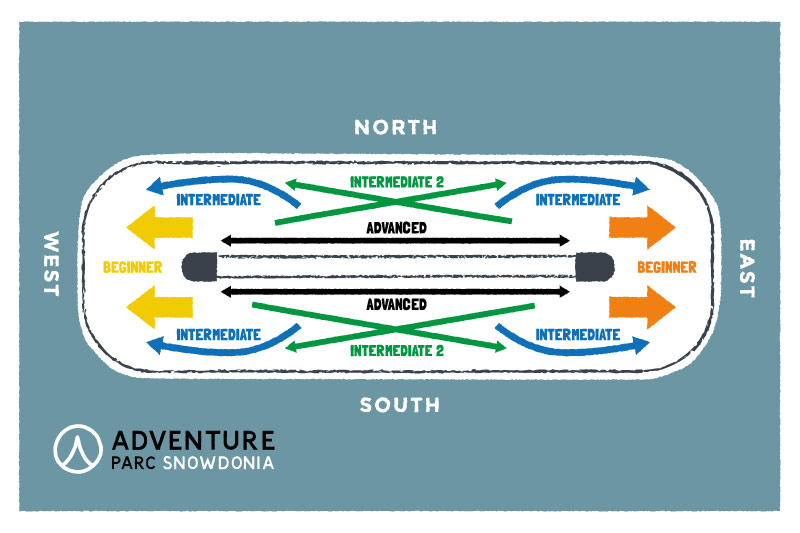
Each one hour surf session is organized into advanced, intermediate and beginner groups. Each group surfs a part of the lagoon that produces waves according to their skill level. By dragging a foil through the water, Surf Snowdonia generates two advanced waves, four intermediate waves and two whitewater bay waves for beginners. After a 70-90 second break, the foil runs in the reverse direction and produces the same set of waves, but in the reverse direction. So, on the advanced and intermediate waves, you are alternating between riding lefts and rights.
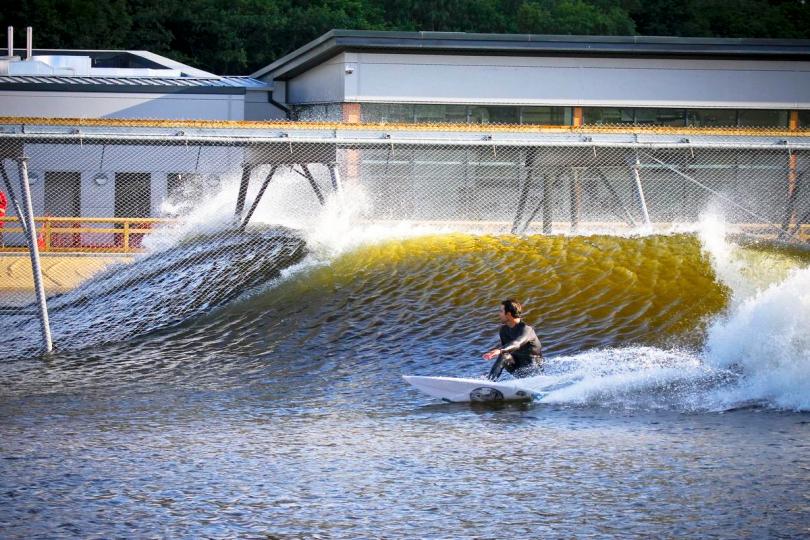
Advanced Wave 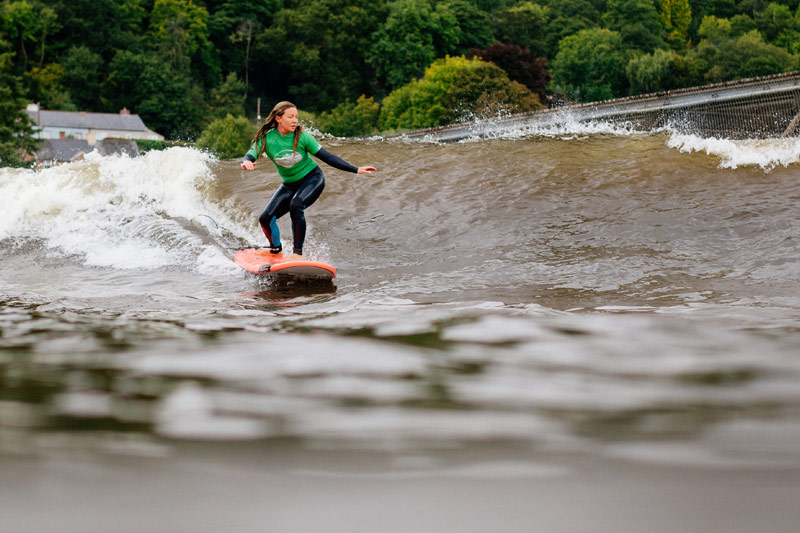
Intermediate Wave 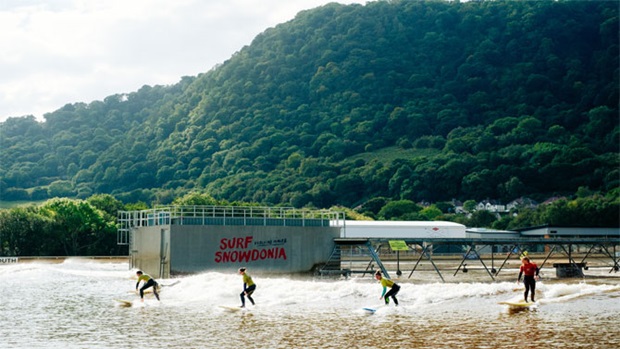
Beginner Wave
The advanced wave typically has a face height of 4-5′, though the park says it measures just over 6′ on the face. Riding just adjacent to the pier that protects the foil, surfers can enjoy rides for up to 16 seconds. The bottom of the pool has a variable shape to it so there are different sections to each wave. The wave doesn’t lack power, and its considered soft-but-rippable by most standards. However, barrels are basically non-existent and airs are almost impossible for the vast majority of surfers. Consider using a board with more volume and lower rocker. With the maximum 3 advanced surfers on each side of the pier, each surfer may catch up to 12-18 waves per session. The best wind for the advanced wave is either east or west.
Like most foil-produced waves, the energy from the foil tends to push advanced surfers away from the take off spot, and if you drop or get caught behind the whitewater, its tough to recover. Stay close to the pier during your paddle in and while you surf.
For the advanced wave, consider riding a board with lower rocker and higher volume than your standard shortboard.
The whitewater from the advanced wave reforms into two intermediate (but quick) waves that run at a diagonal to the shoreline. Surf Snowdonia recommends that you use their own foam longboards (free hire) to surf the intermediate waves. On each side of the lagoon, there are up to 4 intermediate surfers sharing the intermediate waves (so two surfers per intermediate wave). With a wave every 70-90 seconds, that mean each surfer can get up to 12-18 waves per intermediate session.
At the end of the lagoon, the swell turns into a knee-high straight hander that beginners share. On each end of the pool, up to 6 beginners share each wave.
Pricing
The cost to surf depends on the time and day of week. Peak hours are from Friday morning until 4 pm Sunday. Surf Snowdonia prices for adult one-hour sessions are shown below.
| Session Level | Peak | Non-peak |
| Beginner | £40 | £35 |
| Intermediate | £45 | £35 |
| Advanced | £50 | £45 |
Children cost the same, except on the beginner wave where they are £5 less than adults.
Children’s lessons range from £40 to £70 and adults run from £50 to £70. The higher prices apply on the weekend. The lessons are 90 minutes and include 60 minutes of water time. Surf Snowdonia also offers 3-day courses and “Advanced Development” days for £250.
On-Site Experience
Before making your way to Surf Snowdonia, its strongly advised to make reservations or at least check to see that there are ample open slots on your big day. Plan on arriving at least 1 hour before your session, especially if you need to rent a board and/or wetsuit. If you give yourself 2 hours, then you are sure to have time to watch the session prior to yours which can make a world of difference.
Immediately upon arrival Surf Snowdonia staff greets you with smiles that are warm and welcoming. The wave itself lends it self to fun, stress free sessions and that attitude carries over into the employees.
The front desk crew will check you in and guide you to the changing room to get your wetsuit on (if your session is coming up). Guide and instructors will give you some tips and help figure out what level/wave you should surf (beginner, intermediate, or advanced). The staff will also help you pick a board if you need a rental.
Surfboard rentals run £10.00 per hour or £15.00 per day. The shop at Surf Snowdonia carries soft tops, Firewire and Rusty surfboards that vary in style and size. Surf Snowdonia is in north Wales, so it’s wetsuit season there year-round. The water temperature varies from 46°F (8°C) to 71°F (22°C). Logically, the park offers daily wetsuit and boot rental for £6.00 plus lockers for £2.00.
If you are signed up for advanced development day, your session will be recorded so you can review the video with your instructor after your water sessions. The instructors have an app they use to review your surfing in slow motion and draw on top of the footage to help surfers understand how to improve. This help surfers quickly advance and hone their skills, and they send you the video via email after your session.
Between sessions, grab food and drinks ad the Surf Side Deli, offering sandwiches, soups, salads, etc., or the Surf Side Bar and Kitchen which offers heartier meals like burgers and pizzas. The Deli is open until 5 pm, and the Bar and Kitchen opens at 5 pm. Surf Snowdonia suggests guests make Reservations for evening meals.
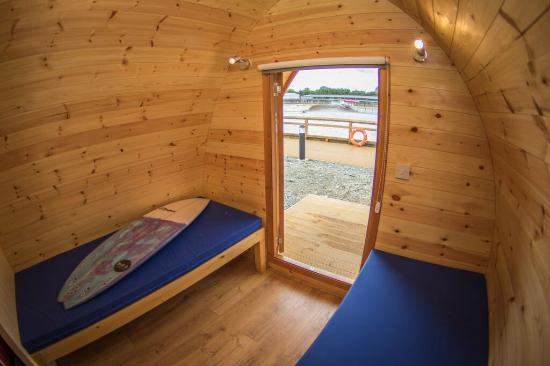
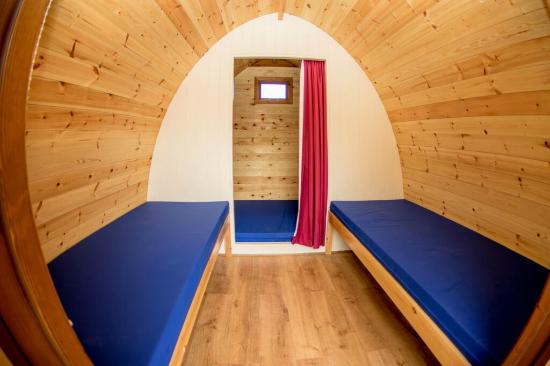
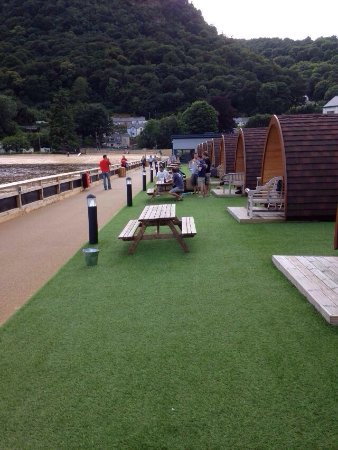
For surfers who want more than one day’s worth of waves, there are “glamping” accommodations around the lake with great views of the action. Each glamping pod costs around £110 per night and can sleep up to 4 guests.
Bar is open to 11pm on most nights, with regular live music at weekends during the summer.
History
Cowny Adventure Leisure Ltd., the company that owns Adventure Parc Snowdonia, submitted their initial plans for a surfing facility in 2013. Initial plans predicted 67-70k guests annually.
In April 2014 the park received final approval and construction started a month later. The Welsh Government provided £4 million in funding in June 2014.
To create waves, the team hired Wavegarden and decided to use their Lagoon technology. Wavegarden was responsible for the shape of the lagoon, the depths and curves of the pool floor, the pier and of course the foil that produces the waves. Wavegarden worked closely with Leitner (a company famous for the lifts that drive cable cars and ski lifts) to develop the drive mechanisms.
Because the location had been used as an industrial site for the previous century, Surf Snowdonia put significant resources in decontaminating the site. The construction team was able to reuse 25k cubic meters of material from the the aluminum factory that operated on the site until 2007, including 400 tonnes of steel, cast iron and copper.
The high local water table, its location on the flood plain for the River Conwy, also complicated construction for Surf Snowdonia. To stabilize the facilities, a total of 6.3 miles of piling was driven into the ground.
In April 2015, a fire on the construction site caused damage to a tower.
As the big day approached, Surf Snowdonia’s lagoon was filled with fresh water. The water comes from mountain lakes and passes through a hydroelectricity plant before filling the pool. Continuing to do their part to protect the environment, the park cleans the water using UV light and filtration, which means it chemical free and can drain right back into the local River Conwy without upsetting the environment.
Surf Snowdonia opened to the public on August 1st, 2015. It reported cost £12-$18 million to build, but they were off to a good start with 14,000 visitors in the first two weeks, 3500 of which surfed in the pool. Before they closed for repairs and the winter of 2015, the surf lagoon booked 97% of the surfing slots. They also were well received by the professional surfer community:
I swear this was a dream for every surfer 10 years ago and now it’s finally here. It’s the future of surfing; well for the sport of surfing, anyway. The waves are really high performance.
Jack Freestone
I wish I could surf it all day. It is interesting, especially the setting.
Luke Davies
The park was quickly booked up by pros for a variety of videos and contests, including Red Bull Unleashed (the world’s first stadium surf contest) and the UK Pro Surf Tour.
However, technical issues in the first few weeks plagued the park. Just after the Red Bull Unleashed contest in September 2015, Surf Snowdonia decided to close for the season because of a rip in the pool liner.
In March 2016, Surf Snowdonia reopened after spending £1 million on repairs and improvements. They also started offering more activities (like Stand-up Paddling on the River Conwy) and improved camping and catering facilities.
In November 2018, the Conwy County Borough Council approved plans from Surf Snowdonia that allowed them to expand operations even further beyond surfing. The £16 million plan calls for additional indoor and outdoor recreation facilities like a pump track and outdoor adventure playground, as well as a 106-room Hilton Garden Inn. The plan also calls for additional concierge services, conference facilities and a spa. Construction started on the improvements in late 2018, but the hotel is receiving some push back from the community.
The upgrades coincided with a rebranding; Surf Snowdownia is now part of the larger Adventure Parc Snowdonia.
In May 2019, the park reopened for the year, and in August 2019 they opened their indoor adrenaline park with rock walls, parkour trails, and more.
Sources: Adventure Parc Snowdonia, Adventure Sports Network, Wikipedia, Surfbunker